


If you’re within five years of retirement, this is not the time to coast.
It’s the time to focus.
Small decisions in these final years can have an outsized impact on whether you retire with confidence — or miss the mark entirely
The good news?
If you get these five years right, they can add more value to your plan than the previous 20 combined
Let’s walk through the five principles that matter most.
1. The Portfolio Tipping Point
There comes a moment when your portfolio starts doing more of the heavy lifting than you are.
Early on, your contributions drive growth.
Later, your returns do.
In the example from the transcript, after years of consistent saving and compounding, annual market growth eventually dwarfs the annual contribution The Retirement Red Zone_ Why th….
That’s the tipping point.
Here’s the danger:
- You panic during a downturn and get too conservative.
- You chase what just performed well.
- You change strategy at exactly the wrong time.
When your portfolio is generating more growth than you’re contributing, getting in your own way can cost hundreds of thousands — sometimes millions — over just a few years The Retirement Red Zone_ Why th….
The goal isn’t to take reckless risk.
It’s to make sure fear or hype doesn’t derail compounding when it matters most.
2. Your Portfolio Is Not a Plan. Income Is.
Many people think,
“If I just hit $2 million (or $3 million or $5 million), I’ll feel confident.”
Then they hit the number.
And nothing changes.
Because a portfolio balance isn’t what funds your lifestyle.
Income does.
You need to understand:
- What income comes from Social Security, pensions, rentals, or part-time work
- What gap your portfolio needs to fill
- How that changes over time
Your portfolio isn’t the goal.
It’s the engine that supports your spending.
Until you translate assets into income, you don’t have a retirement plan — you have a number.
3. Sequence of Return Risk Gets Real
While you’re working, market downturns are uncomfortable.
But you’re still contributing.
In retirement, you’re withdrawing.
That changes everything The Retirement Red Zone_ Why th….
If the first few years of retirement include a major downturn, and you’re pulling income at the same time, you shrink the base your portfolio needs to recover.
That’s sequence of return risk.
It’s not about average returns.
It’s about timing.
The solution isn’t abandoning stocks — inflation is a real long-term risk The Retirement Red Zone_ Why th….
The solution is structure.
At Root, we talk about having intentional growth assets alongside intentional reserves. Enough growth to outpace inflation. Enough stability to avoid selling stocks at the wrong time The Retirement Red Zone_ Why th….
Balance matters.
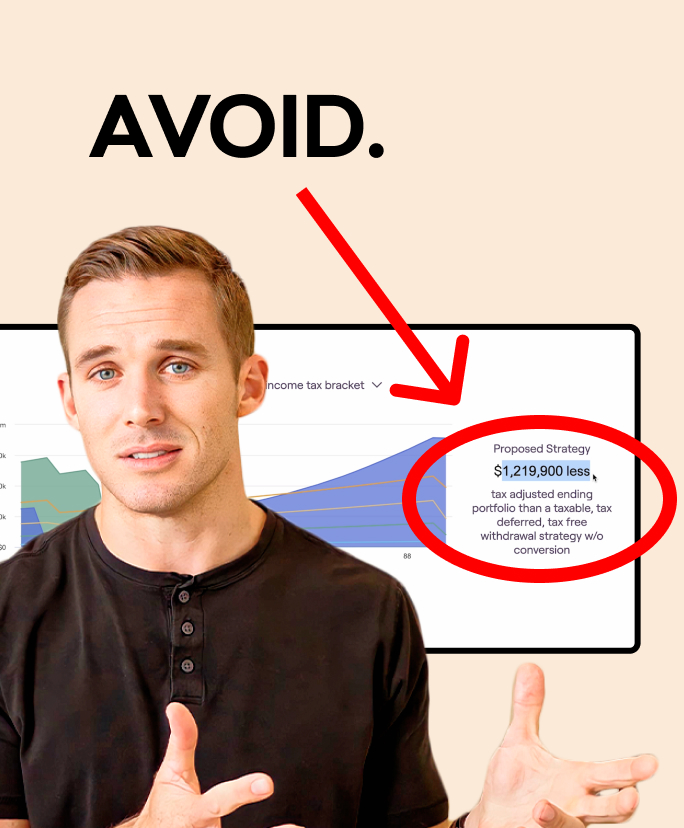
4. Taxes Will Likely Be Your Biggest Expense
Pause on that.
For many retirees, taxes become the single largest lifetime expense The Retirement Red Zone_ Why th….
When housing gets expensive, you can downsize.
When travel costs rise, you can cut back.
But most people treat taxes as fixed — because during their working years, they largely were.
Retirement changes that.
You control:
- Which accounts you withdraw from
- When you take Social Security
- Whether you do Roth conversions
- How you structure charitable giving
- How you harvest gains
A thoughtful tax strategy isn’t about avoiding taxes entirely.
It’s about reducing lifetime taxes so more of your money supports your life — not the IRS.
5. Design Your Life, Not Just the Spreadsheet
If you’re reading this, you probably take your finances seriously.
You’ve optimized your investments.
You’ve reviewed your accounts.
You’ve modeled the projections.
But have you designed your life?
What does the second Tuesday of retirement look like?
Who are you spending time with?
What are you building, learning, contributing to?
Too many people step into retirement financially prepared — and emotionally lost The Retirement Red Zone_ Why th….
Money is a tool.
If you don’t know what it’s supporting, optimization won’t feel satisfying.
Final Thought: The Red Zone Requires Intention
The final five years before retirement aren’t about chasing performance or squeezing every last dollar.
They’re about alignment.
- Alignment between portfolio and income.
- Alignment between growth and stability.
- Alignment between tax strategy and spending.
- Alignment between money and meaning.
Get these years right, and retirement becomes a chapter you step into confidently — not cautiously.
Want Help Navigating the Red Zone?
This is exactly what we help clients do at Root.
We don’t just run projections.
We walk through:
- What you want life to look like
- How much you can spend
- How to structure investments
- How to reduce lifetime taxes
- How to protect what you’ve built
If you’re within five years of retirement and want clarity on whether your plan is positioned correctly, you can schedule a call with our team.
No pressure.
Just a conversation about making these next five years count.
👉 Schedule a call and make sure your retirement red zone works for you — not against you.
The information presented is for educational and informational purposes only and should not be construed as personalized investment or financial advice. The content discusses general retirement planning strategies and is not intended to recommend any specific course of action for any individual.
Social Security claiming strategies involve a number of variables, including life expectancy, portfolio returns, tax considerations, and personal circumstances. Decisions regarding Social Security benefits should be made in consultation with your financial advisor, taking into account your full financial picture.
Examples provided are hypothetical and for illustrative purposes only. They do not reflect any specific client situation and should not be relied upon for investment decision-making. Past performance of investments is not indicative of future results. All investing involves risk, including the potential loss of principal.
Root Financial Partners, LLC provides tax planning as part of its financial planning services. However, we do not provide tax preparation services, represent clients before the IRS, or offer legal advice.
Clients should consult their CPA or attorney before implementing any tax or legal strategies discussed. Nothing in this video should be interpreted as a recommendation to take a specific tax position or legal action.
This content may include discussions around advanced financial planning strategies such as Roth conversions, backdoor Roth IRAs, tax loss harvesting, charitable giving, estate planning tactics, or Social Security claiming strategies. These concepts are general in nature and are not personalized advice. Actions related to these strategies may trigger tax consequences or legal implications. Always consult with your CPA or attorney to assess suitability based on your personal financial circumstances.
Suitability for these strategies depends on your individual tax situation, income, age, investment profile, estate plan, and other factors. Actions related to these strategies may trigger tax consequences or legal implications. Always consult with your CPA or attorney to assess suitability based on your personal financial circumstances.